
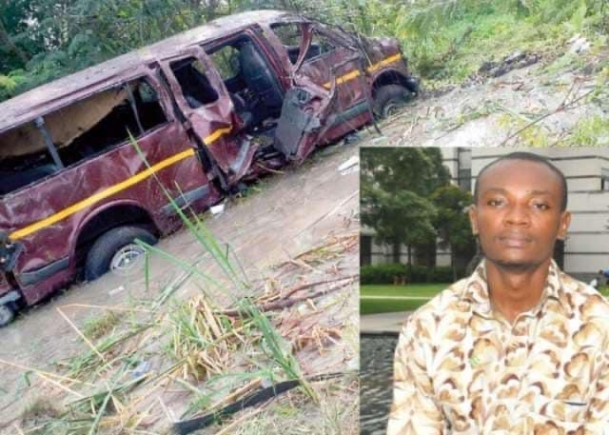
Ten years ago today, Ghana’s media community was shaken by a tragic accident that claimed the life of journalist Samuel Nuamah and left several others gravely injured. The incident, which occurred on August 20, 2015, remains one of the most somber reminders of the risks journalists face while on duty.
On that fateful day, members of the presidential press corps were accompanying then-President John Dramani Mahama to Ho for an official engagement. After completing their assignments, a group of journalists decided to lead the return journey to Accra, as the President had private engagements to attend.
Disaster struck when one of the vehicles, a Ford minibus, suffered a rear tyre burst while traveling at high speed. Despite the driver’s efforts, control was lost, and the vehicle careened off the road, somersaulting multiple times before crashing into a nearby bush.
Samuel Nuamah, a 36-year-old reporter with the Ghanaian Times, was violently ejected from the vehicle and subsequently trapped beneath the wreckage, succumbing to his injuries instantly. Other journalists, though restrained by seatbelts, sustained serious injuries, including head trauma and fractures.
The injured were initially treated at Michel Camp Health Facility before being airlifted via military helicopter to the Air Force Base and subsequently transferred to the 37 Military Hospital. Even a decade later, some survivors, such as William Gentu of Peace FM, continue to battle long-term consequences of the accident. Gentu recently underwent surgery on his hand and continues to receive medical attention.
The tragedy not only devastated families and colleagues but also sparked urgent conversations about journalist safety during high-profile assignments. Calls for improved vehicle standards, stricter speed protocols, and better emergency response measures for media personnel gained momentum in the aftermath. Media organisations were urged to implement intensive training for reporters covering high-risk events, a plea that remains relevant today.
Colleagues remember Nuamah not only for his professionalism but for his unwavering dedication to storytelling. “He gave voice to the people,” one former colleague recalled. “No policy change can bring him back, but his legacy must make journalism safer for others.”
This afternoon, journalists and friends will lay a wreath at Nuamah’s tomb at Osu Cemetery in Accra, commemorating his life and service. As the media landscape continues to evolve, the lessons of that tragic day remain a poignant reminder: journalists risk their lives to keep the public informed, and their safety must never be treated as an afterthought.
A decade may have passed, but the call for stronger protections for journalists resonates as urgently today as it did in 2015.
Source – My News Ghana
About the Author