
Ghana’s IMF Dilemma
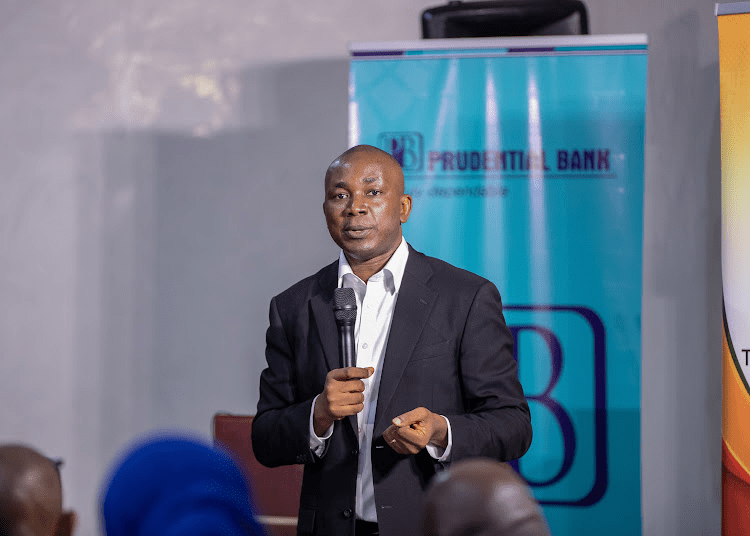
Ghana’s repeated reliance on the International Monetary Fund (IMF) has once again come under scrutiny, as a leading economist has urged the nation to break free from what he describes as a “cycle of dependency.” The economist, speaking at a public lecture in Accra, argued that Ghana’s overdependence on IMF bailouts has undermined the country’s ability to pursue long-term, homegrown solutions to its economic challenges.
Ghana is currently under its 17th IMF-supported program, with many analysts warning that without bold reforms, the nation could soon find itself seeking yet another bailout. According to the economist, this trend has weakened Ghana’s fiscal independence and placed unnecessary burdens on ordinary citizens.
The Cost of Repeated Bailouts
The economist highlighted that while IMF programs often provide short-term relief, they come with stringent conditions such as austerity measures, tax increases, and strict monetary policies. These conditions, he noted, usually deepen the hardships of ordinary Ghanaians, particularly low-income families and small businesses.
“Each time Ghana turns to the IMF, it signals a failure to manage our own economy sustainably. We cannot continue to run to the IMF as a crutch,” he emphasized.
He further explained that IMF bailouts often address balance-of-payment issues temporarily but fail to tackle the structural weaknesses in Ghana’s economy, such as over-reliance on raw commodity exports, fiscal indiscipline, and widespread corruption.
The Need for Homegrown Solutions
The economist urged policymakers to adopt bold, homegrown strategies that focus on industrialization, agricultural modernization, and prudent fiscal management. He called for a renewed focus on value addition to Ghana’s natural resources, particularly cocoa, gold, and oil, instead of exporting them in their raw form.
“Countries that have achieved true economic independence are those that have invested in adding value to their resources. Ghana must follow this path if we are serious about sustainable development,” he stressed.
He also pointed out that Ghana must work towards improving domestic revenue mobilization, cutting down on wasteful spending, and strengthening institutions to ensure accountability.
Lessons from Other Countries
Drawing comparisons with other countries, the economist cited examples of nations that successfully reduced their dependence on international financial institutions by implementing sound economic reforms. He pointed to Rwanda’s heavy investment in infrastructure and technology, as well as Ethiopia’s aggressive industrial policy in recent years, as models Ghana could learn from.
“These countries have shown that with discipline and long-term planning, it is possible to grow without constantly seeking external bailouts,” he said.
Public Reaction and Political Implications
The call to move away from IMF dependence has resonated with many Ghanaians who feel the impact of rising taxes, inflation, and high living costs tied to IMF policies. On social media, many citizens echoed the sentiment that Ghana must “take control of its own destiny” rather than relying on the IMF to solve its fiscal problems.
However, political analysts caution that breaking free from IMF dependence will require tough decisions, including curbing public sector wage bills, fighting corruption, and enforcing strict financial discipline — policies that are often unpopular with voters.
A Crossroads for Ghana
As Ghana works to stabilize its economy under the current IMF program, the economist warned that this could be the nation’s last chance to chart a new course. He called on policymakers, civil society, and citizens alike to demand reforms that will lay the foundation for long-term stability and prosperity.
“If we do not break free from this cycle, we risk condemning future generations to perpetual dependency,” he cautioned.
Ghana’s path to economic independence remains fraught with challenges, but as the economist’s call highlights, the country has the potential to chart a new direction. Whether Ghana will embrace tough, homegrown reforms or continue to lean on IMF bailouts will determine the future of its economy and its place in Africa’s growth story.
Source: My News Ghana
About the Author