
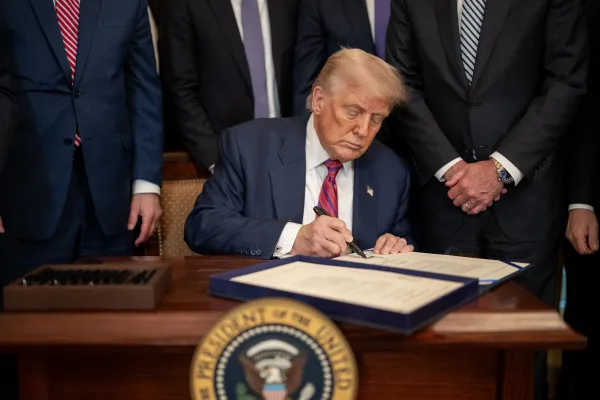
WASHINGTON, D.C. — In a dramatic escalation of his protectionist economic agenda, former U.S. President Donald Trump has unveiled a sweeping array of new tariffs set to take effect on August 7, impacting nearly 70 countries and redrawing the contours of global trade just one week from now.
Initially scheduled for enforcement on August 1, the rollout was delayed following intense backdoor negotiations and lobbying efforts by affected nations and industry leaders. The tariffs range from 10 to 39 percent, targeting a broad spectrum of goods and services in an effort Trump says will bolster U.S. manufacturing and limit reliance on foreign imports.
“Tariffs are not just an economic policy—they’re a tool of strength,” Trump stated, touting the move as a strategic advantage that will encourage domestic production and make U.S. exports more competitive.
Key Tariff Rates by Country
- European Union: A 15% tariff cap has been formalized following a new trade framework agreement, hailed by EU Trade Chief Maros Sefcovic as a “stabilizing mechanism for transatlantic business.”
- Switzerland: Expressed deep disappointment after being hit with the highest rate of 39%, despite what it calls a “constructive” engagement with Washington. Swiss pharmaceutical giants Roche and Novartis, major U.S. investors, are now reassessing their forecasts.
- China: Facing a combined 30% tariff, following a temporary pause until August 12. Beijing warned the move threatens “all parties” and reiterated its opposition to protectionism.
- Japan: Slapped with a 15% rate—down from the threatened 25%—but its central bank has already reported a dip in profitability and a potential pullback in capital expenditure.
- South Korea: Agreed to a verbal arrangement of a 15% rate but remains without a written deal. Trade Minister Yeo Han-koo warned this marks a “new normal” in U.S. economic diplomacy.
- India: Will face a 25% levy, alongside unspecified penalties tied to its continued engagement with Russia. Talks between Washington and New Delhi remain ongoing.
-
Canada: Faces an immediate tariff hike from 25% to 35%, with Trump citing Ottawa’s UN stance on Palestine and alleged inaction on fentanyl trafficking. Items under the USMCA remain exempt.
- Australia: Spared the brunt with a minimal 10% tariff. Trade Minister Don Farrell noted this could improve Australian competitiveness in the U.S. market.
-
Pakistan: Secured a 19% rate and called the move the beginning of “a new era” in bilateral trade, particularly in energy and tech.
-
Bangladesh and Sri Lanka: Negotiated reductions to 20%, with officials in both countries calling the outcome a diplomatic win.
-
Taiwan: Avoided a 32% hit and will now be subject to a 20% tariff. President William Lai said further reductions are possible pending future deals.
-
South Africa: Faces a looming 30% tariff, prompting President Cyril Ramaphosa to enter urgent talks with the White House.
- Thailand, Cambodia, Malaysia: Saw notable reductions, which officials say will enhance economic resilience and preserve crucial export sectors such as textiles and electronics.
Markets React
Global financial markets responded with volatility. European stocks hit a three-week low, and Asian markets suffered their worst week since April. However, oil prices remained stable, suggesting investors may view energy supplies as less vulnerable to trade disruptions.
Despite mixed reactions, Trump’s renewed push for economic nationalism appears to be reshaping international commerce yet again, leaving governments scrambling to shield their economies and manufacturers recalibrating cost strategies.
Analysts suggest these measures, if sustained, could herald a new phase of geopolitical and economic realignment in the post-pandemic global economy—one where strategic autonomy takes precedence over interdependence.
Source – My News Ghana
About the Author